
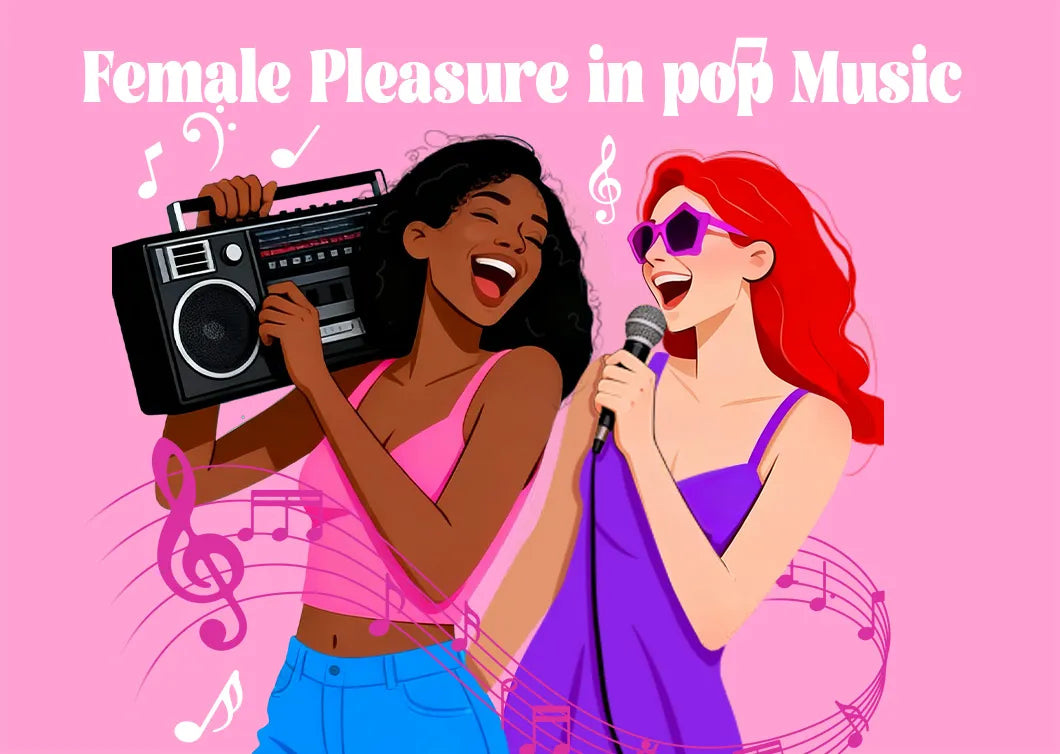
Introduction
Pop music has long been a space where women reclaim their voices, but today many artists go further by openly embracing desire, pleasure, and self-expression.
Through bold lyrics and confident storytelling, female empowerment is increasingly shaped by the freedom to own pleasure without shame.

What Is the Old Script? Silence, Shame and Objectification
1 Women as Objects, Not Subjects
From the early days of mainstream pop music songs, women were often cast into roles defined by romance or victimhood,not by their own desire.
Lyrics would focus on "I gave my heart", "she waits for him" or "he left me",rarely on a woman saying, "I want" ,"I feel" or "I do this for myself."
In many tracks, women's bodies are observed, appraised, and sexualised through a male‐gaze lens.
Research shows this clearly.
Studies on sexualisation in popular music reveal that women appear far more often as passive figures of desire, while men are shown as active desiring subjects.
2 Shame, Silence and Female self pleasure as Taboo

For decades, mainstream pop music lyrics treated female self-pleasure as a scandal or a taboo.
Even when female singers hinted at pleasure, the language was cautious, coded and indirect, using words like "touch" or "melt".
This silence communicated that female pleasure wasn't important.
Even when female singers hinted at sexual pleasure, the language was cautious, coded and indirect.
Words like "touch", "feel" or "melt" were used instead of direct references to female self-pleasure.
In other words, the idea of female self-pleasure was not only unspoken, it was considered culturally unacceptable.
As one commentary put it: "The overwhelming focus of songs about sex on men — male pleasure and desire — says to society that female pleasure isn't important."
How Did the Change Happen? — Breaking the Chains of Taboo
1 From Whispers to Bold Declarations
While the mainstream still avoided overt references to female pleasure, some brave pop songs began to slip in ambiguous messages of autonomy and female self-pleasure.
For example, I Touch Myself (1990) by Divinyls openly dealt with female masturbation and directly confronted the taboo surrounding female self-pleasure.
This was a revolutionary act of female empowerment, transforming private desire into public defiance.

And She Bop (1984) by Cyndi Lauper was deliberately crafted to hint at female self‐pleasure under a pop veneer.
These early songs offered glimpses of change.They still faced backlash or controversy, but they opened room for conversation.
2 The Medium Becomes the Message
Beyond lyrics alone, artists began experimenting with visuals, tone and delivery. Pleasure was no longer just a metaphor—it became defiance.
Studies show that when listeners hear songs depicting sexual desire (rather than only romantic love), their attitudes toward autonomy and body-pleasure shift.
What Today's Manifesto: Pleasure, Power & Disclosure
Phase 1 — The Modern Turning Point (2000s–2010s)

The modern shift began when female artists stopped waiting for permission to express desire. Madonna, even in her later-era work and public statements, challenged the culture that shamed women for wanting pleasure.
Around the same time, Janet Jackson pushed empowerment themes, such as the 1993 hit New Agenda which frankly dealt with sexism and racism, helping pop music lyrics move away from silence and toward self-definition.
This laid the groundwork for a new era where women could openly claim their bodies, their needs, and their pleasure.
Phase 2 — Self-Pleasure Enters the Chorus (2010s)
By the mid-2010s, female self pleasure was no longer a hidden subject.
In pop music songs like Love Myself (2015)by Hailee Steinfeld, self-directed desire became the center of the narrative, turning self-touch into a symbol of confidence rather than shame.
Meanwhile, I Don't Need a Man (2006)by The Pussycat Dolls made it clear that pleasure can be self-owned, not dependent on anyone else.
These weren’t metaphors—they were announcements that women could be the main character in their own pleasure stories.
Phase 3 — Desire Goes Mainstream (Now)
Today, pop music lyrics speak with a new ease. Instead of apologizing for wanting pleasure, female artists now say what they feel without hesitation.

When Ariana Grande was named Billboard's Woman of the Year in 2018, she addressed the disparities between male and female artists.
From the unfair stereotypes women endure to the different standards applied when female artists release music.
At the 2017 MTV Video Music Awards, where she received the Michael Jackson Video Vanguard Award, Pink encouraged women to stay true to themselves:
"We take the gravel and the shell and we make a pearl, and we help other people to change so they can see more kinds of beauty."
Result — From Whisper to Normal
What was once scandal is now standard. Female pleasure has become something women can sing, own, and celebrate—and modern pop music songs prove it with every chorus.
At the same time, listeners and fan communities are evolving too.
When women hear a chorus celebrating female self-pleasure instead of waiting for someone else, it rewires expectations and helps dismantle shame.

Why Does This Matter Today? Culture, Identity and Power
1 Reclaiming Cultural Narratives
Pop music is a reflection of culture and also a builder of it, we recognize that when pop music lyrics shift, society's lens shifts.
The fact that more songs now feature women owning their pleasure signals a broader social change toward equality.
2 Personal Identity Empowerment
When women hear pop music lyrics that validate their own desire and pleasure, autonomy over the body turns from concept into lived reality.
The narrative of "I'm here, I feel, I enjoy" replaces the old script of "I hope, I wait, I suffer".
3 The Future of Power in Pop
If empowerment used to mean surviving heartbreak or being louder, today it adds another layer: pleasure.
The message shifts: You aren't just worthy of love, you're worthy of feeling good. And the more pop music songs deliver that message, the clearer the beat becomes.
How to Shape the Future? Owning the Voice of Pleasure

1 Making Pleasure the New Standard
What was once scandal is now standard.
Today, female empowerment adds another layer: the right to feel good. As Pink encouraged at the VMAs, women should stay true to themselves and make their own "pearls" from the gravel.
The journey from silence to summoning has been long.
From women only being allowed to fantasize about being desired, to women openly declaring what they want and how they feel, pop music has mirrored that path.
Lyrics used to hide behind metaphors; now they state the obvious: a woman's pleasure is valid, loud and proud.
2 Reclaiming Your Voice
Remember that female self pleasure isn't just catchy—it's revolutionary.
Every time a female voice sings about self-love, it rewires expectations and helps dismantle the wall of shame.
So next time you listen to a pop music song and hear a female voice singing "I touch myself" or "I love me so hard", know this: it's not just catchy, it's revolutionary. Pleasure isn't a bonus. It's a right.
And for every woman who's ever felt she must wait, hide, or apologize for wanting, pop music now says: Go ahead. Feel good. Own it.
Conclusion
Pleasure isn't a bonus. It's a right. For every woman who's ever felt she must hide or apologize—pop music now says: Go ahead. Feel good. Own it.
About the Author
Maya Collins is a writer covering sex, pleasure, and relationships from a female-first perspective. She's passionate about breaking taboos, normalizing desire, and helping women feel more confident in their bodies and choices.
About Toendi
At rabbit vibrator brand Toendi, we believe sexual wellness is a natural part of confidence and self-discovery.
As a brand dedicated to female empowerment and pleasure, we create products that encourage women to explore their desires freely, embrace their sexuality, and enjoy every intimate moment with confidence.
Join Toendi Shake Hub to share your story, discover new experiences, and unlock exclusive discounts.
Learn more:
Pop Songs About Female Masturbation